
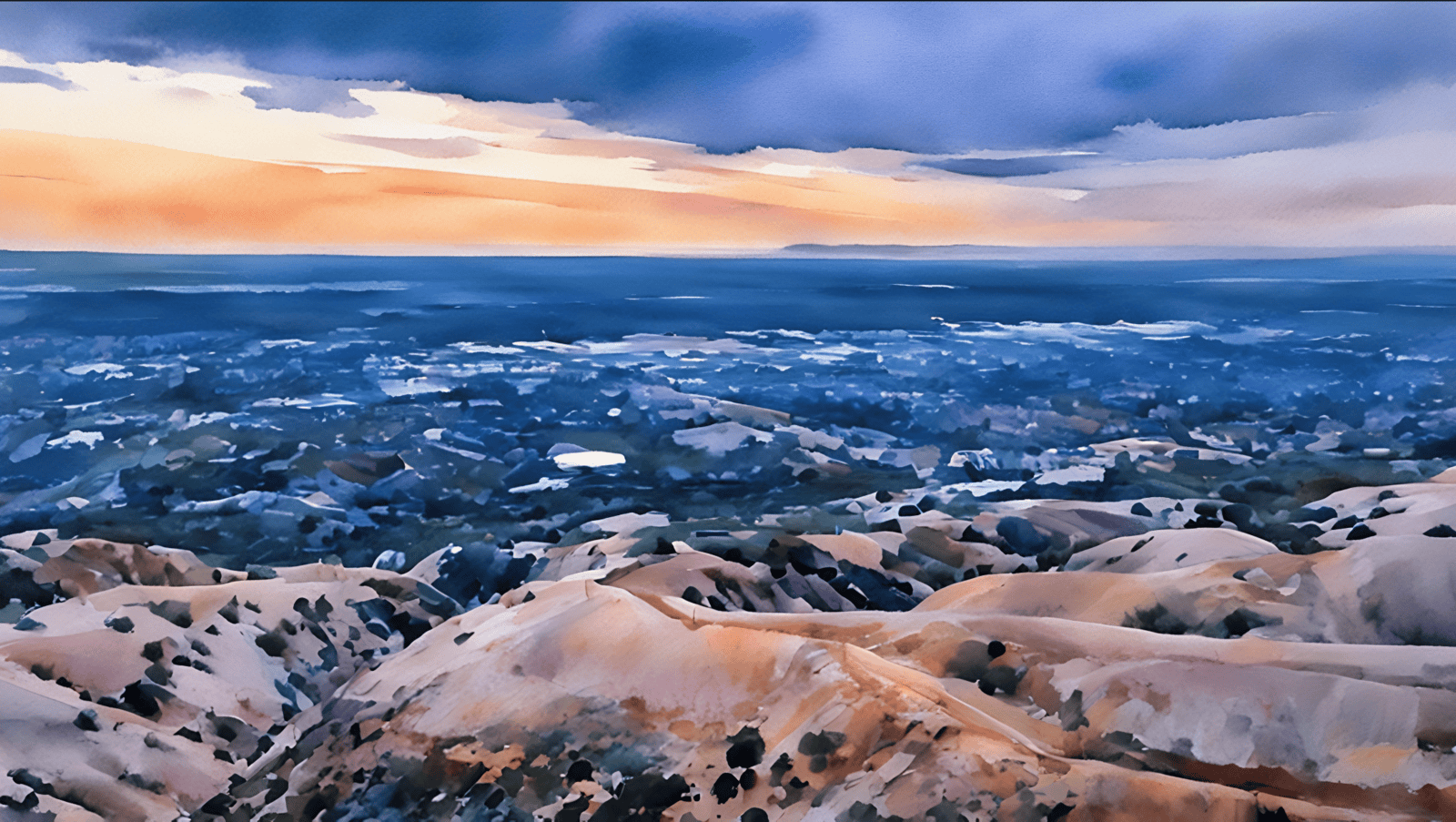
In the 1970s, Chino, California, was home to more cows per square mile than anywhere else on earth. Today, not a single dairy remains. The skyline of silos and barns has been replaced by warehouses, tract homes, and distribution centers. But Chino’s story isn’t one of loss—it’s one of legacy; the innovations born there have shaped dairy operations across the world.
In its prime, Chino was not just a dairy town—it was the Silicon Valley of dairying, a place where relentless ingenuity transformed the craft. The impact of this brief, electric chapter in agricultural history is still rippling through the industry, showcased by how cows are milked, barns are built, and, ultimately, cheese is made.
Southern California wasn’t always suburban sprawl and $45 supermarket smoothies. At one point, it was a powerhouse of agriculture: citrus groves in the Inland Empire, every vegetable under the sun in Imperial Valley, and over 400 dairies across Los Angeles, San Bernardino, and Riverside counties.

As the dairy industry was forced to migrate east in the 1950s from places like Artesia and Bellflower due to encroaching development, many dairymen settled in Chino and nearby Ontario—the land was cheaper, the climate ideal, and the infrastructure could support growth. The California cows were happy indeed, and turned Chino into a global dairying capital.
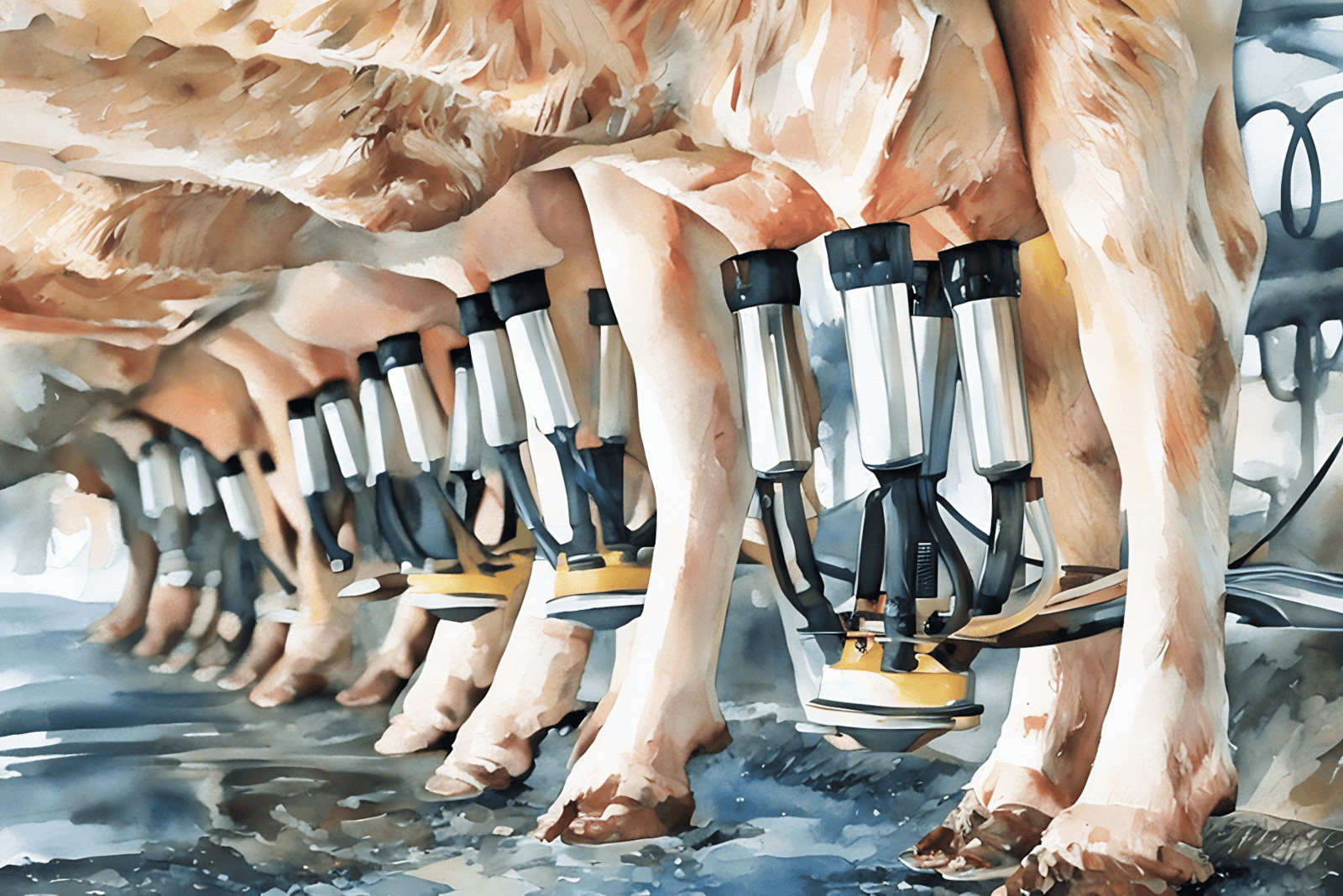
It was more than just scale, though the density was remarkable. What made Chino special was the spirit of experimentation. The herringbone barn design, now standard in many milking parlors worldwide, was perfected in Chino. So were self-locking stanchions, which safely restrained cows during veterinary care and improved management of the dairy overall. Automatic takeoffs—machines that detach from the udder when milking is complete—were first widely implemented here. Even circular water troughs with sloped access were a Chino original, designed to keep the water cleaner and reduce waste.
The innovation extended to genetics, nutrition, and milking schedules, too. The space constraints inspired systems that could maximize care, output, and sustainability across all dairy products, but especially fluid milk—the foundation of it all.
But why, out of every agricultural town in the world, was this all happening in Chino? While there is no definitive answer, there are many converging factors that may have created this boom: fertile land, accessibility, and opportunity. The land was cheaper than more coastal towns, there was a mild climate that made year-round production possible, and there was a seemingly endless supply of alfalfa from Imperial Valley to the south.

Driven by Innovation
Not far from Chino is Cal Poly Pomona and their “Learn by Doing” model, which was pretty rare for higher education in the 1970s. Blending scientific study and hands-on experience with local farms created an incubator for new talent, and many graduates from Cal Poly Pomona and its sister campus in San Luis Obispo became dairy managers, consultants, veterinarians, and researchers in the Chino Valley.
The Cal Poly influence continues today, partnering with the Los Angeles County Fair to experiment with new ways to bring fun agricultural products and education to a wider audience every year.
Look at anything official from the city of Chino, and you’ll notice the slogan, “Where Everything Grows.” The natural water that runs beneath Chino lends a sort of magic to the soil, helping to make it the agricultural town it was, even before dairies moved in.
Then, in 1971 when the 60 Freeway opened, a town formerly removed from many other parts of California was suddenly accessible, making transport a breeze and expanding the ability to produce milk for communities outside their local reach.
It wasn’t just the practical advantages drawing people in—there was some aesthetic appeal in the mix as well. Thanks to the Dairy Roadside Appearance Project (DRAP), dairymen found themselves in friendly competition to create the most picturesque dairies around. Before long, Chino was known for more than its milk—it was known for having some of the best-looking dairies in the country, each one proudly dressed to impress.
Each June for National Dairy Month, John Kampen, the chairman of DRAP, surveyed dairies in Chino and the surrounding area. The best dairies were given a “Dairy of Merit” sign to proudly display, adding to their roadside beautification.
“There were high standards, and it really inspired the dairies to up their game,” Kampen says. “Not only were they producing the highest-quality milk, they also looked beautiful. It was a joy.”
So much high-quality milk with all this new freeway access made it possible to open the Golden Cheese Company of California—then the world’s largest cheese manufacturing plant. A cheese plant needs to be near the people or the milk—this had both, with 8 to 12 million people between the dairies and the coast.
Intimately knowing the best dairy in the area, Kampen was in charge of procuring milk for the facility. When the plant was being built in the mid-1980s, California had a higher per-capita cheese consumption than any other state—but all the cheese they were eating was coming from elsewhere, mainly Wisconsin. Now there was a way to make cheese for locals from all that California milk.
Around this time, the “goat ladies of the ’80s” were growing in popularity, and women like Laura Chenel and Mary Keene were changing the way people looked at American cheese with small-scale goat’s milk cheese production.
The combination of Southern California’s developments in manufacturing technology with growing interest in local food production throughout the state inspired a cheese boom that gave way to more artisan producers up the coast within the next decade.
Dutch, Portuguese, and Basque farmers were key players in building Chino’s community and reputation, bringing their skills and traditions to the area. Many families shaped the dairying landscape, but no history of Chino is complete without mention of the Stueve family.
Alta Dena Dairy, founded in Monrovia in 1945 by brothers Elmer, Harold, and Edgar Stueve, began with just 61 cows and a wagon. When zoning regulations pushed dairy out of Los Angeles County, the Steuves expanded east to Chino, where they eventually oversaw a fast-growing herd of Holsteins. By the 1970s, it was widely regarded as the largest family-owned dairy in the world.
They also created the first drive-thru dairies or “cash and carries” in 1951—a Southern California concept ahead of its time. Most are gone, but some Alta Dena drive-thrus still exist today.
That entrepreneurial legacy lives on in the cheese world through descendant sisters Marnie and Lydia Clarke, who run the Cheese Cave in Claremont, California, and DTLA Cheese Superette in Los Angeles. “Dairy is really engrained in me and my sister,” Marnie says. “We feel so honored to continue their legacy in our own way.” The sisters called their grandfather Harold’s milking parlor “the moo-tel for cow comfort”—one of the first of its kind in the area.
Alta Dena didn’t just produce milk; it revolutionized the system, emphasizing raw-milk production, selective breeding, and high-quality output with rigorous sanitation standards. Their operations became a model studied across the Western US.

Today, a park is under construction on a small portion of land at the site of the original Stueve dairy complex, and it will be named after the family in recognition of their contributions to the city of Chino.
Another family operation with roots in Chino is the Alexandre Family Farm. Now, as fifth-generation farmers, the Alexandres have five regenerative organic dairies around the California–Oregon border and work with neighboring family farms in Oregon and Idaho. They’re a leader in regenerative methods, providing organic A2 milk and educating the public on the importance of these practices, which is no small task.
For those who stayed local, Souza Dairy had the last remaining herd in Chino. The Souza family started dairying in the area in the 1920s and had been at the same location on Euclid Avenue since the early 1970s. In a quiet but historic sale in February 2024, all 1,600 head were sold at auction.
“We actually didn’t realize we were the last ones in Chino until people started telling us,” Alice Souza says. “It’s bittersweet, but we’re dairymen and that’s what we do, so we continued to do what we knew for as long as we could. To know you’re the last man standing is kind of an honor.”
The auction was a full-circle moment for the Souza family. “When we had the auction, a lot of people came just to be a part of it,” Frank Souza says. “There were so many cows in Chino. After we started, we went to three other dairies, and after 40 years of running around the valley, we ended up right back where we started.”

The Great Migration
Playing the exhausting game of musical dairies—shuffling cattle from one plot of land to the next—is hardly unusual for this area. One of the forces that pushed dairy out of Chino is a simple regulatory truth: it’s nearly impossible to start a new dairy in Southern California today.
While exact permitting laws vary by county, no new dairy permits have been issued in the region in over two decades. The last major wave of permitting happened in the early 2000s, largely in the Central Valley. In San Bernardino and Riverside counties—where Chino and Ontario sit—environmental regulations, air-quality constraints, and zoning ordinances make building a new dairy functionally illegal. Even expanding an existing dairy is a bureaucratic hurdle.
In practice, this means if a dairy sells its land, that’s it. There’s no replacing it. And many did sell.
As development crept east from Los Angeles, land values soared. Dairymen were eager to keep milking as long as they could, but with the cost of land rising and local feed becoming less accessible, the economic pressure mounted. Some of the older generations opted to sell so they could give their children a good start doing something else, but many sold so they could stay in the game. Because if anything is true about dairying, it’s that it is a calling, and dairymen will continue to work for as long as they possibly can.
As Chino grew more expensive and more urbanized, dairymen migrated north to the Central Valley—places like Tulare, Kings, and Kern counties. Here, they could buy hundreds of acres for the cost of a single Chino parcel and be closer to feed sources and transport corridors. That worked—until those areas got expensive, too.
Next came the move to Idaho, where open land, supportive regulations, and proximity to processing facilities drew many of the same families. Then, a wave of dairies shifted again, this time to New Mexico and parts of Texas.
What’s remarkable is how many dairies throughout the country that are still operating today can trace their roots back to Chino. The genetics, the infrastructure, the management philosophy—all exported from that one tight cluster in Southern California.
Winchester Cheese Company, which produced award-winning raw-milk gouda until its closure in 2013, migrated from Artesia to Chino to Winchester. After a decade without, cheese is coming back to Winchester via Drake Family Farms—they moved their Certified Humane herd of more than 600 goats from Ontario to Winchester and are making their signature goat cheese in a new facility.
There are now fewer than 50 dairies in Southern California. A handful remain in Ontario, where you can still see the rare sight of cattle, mountains, and palm trees all at once. But walk the streets of Chino today, and you’ll find little evidence of the dairy empire it once was.
It’s easy to mourn that loss, especially if you knew it when cows still grazed within sight of the 60 Freeway. Looking at the new skyline of gray warehouses can feel a little like “they paved paradise and put up a parking lot.” But cheese people are used to the ephemeral.
Cheese captures the magic of a very complex moment: the essence of milk, labor, air, and earth. But it doesn’t last forever. It’s meant to be consumed, remembered, maybe even honored, and the cycle of creation starts again.
Chino, too, was a product of its moment—when Southern California’s population needed local food; when land, labor, and creativity converged; when the spirit of family-run ingenuity outpaced even the fastest-growing suburbs. It didn’t last, but it changed everything.
Every modern milking parlor that uses a herringbone layout, every dairy that relies on automatic takeoffs, every nutrition program balancing rations with the same precision used in Chino barns decades ago carries the DNA of this golden age.
Cheesemakers know milk is never just milk. It comes with history. It’s shaped by what the cow eats, how she’s treated, how she’s milked, and what environment she calls home. Even if there are no more cows that call Chino home, its legacy endures in every innovation that keeps the dairy industry moving forward—and that’s a legacy worth celebrating.

Anne-Marie Pietersma
Anne-Marie Pietersma is an actress, comedian, writer, and cheese educator based in Brooklyn, New York. She is the co-creator of the podcast "Is This a Brie?" and owner of The Cheese Basement, where she curates custom food and beverage experiences.