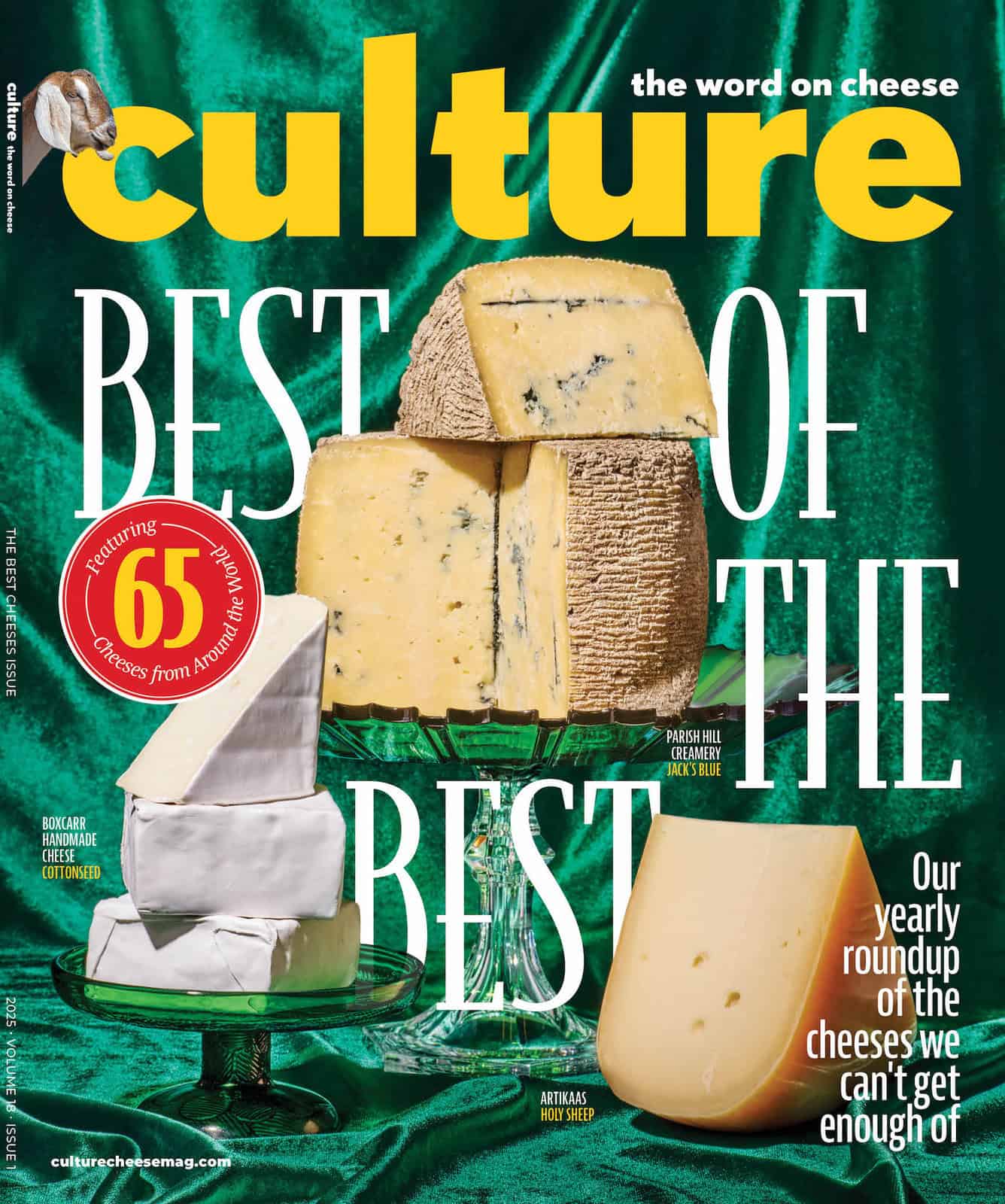

How the 2025 tariffs have impacted the specialty cheese trade, from European PDOs and importers to American artisan makers and indie cheese shops
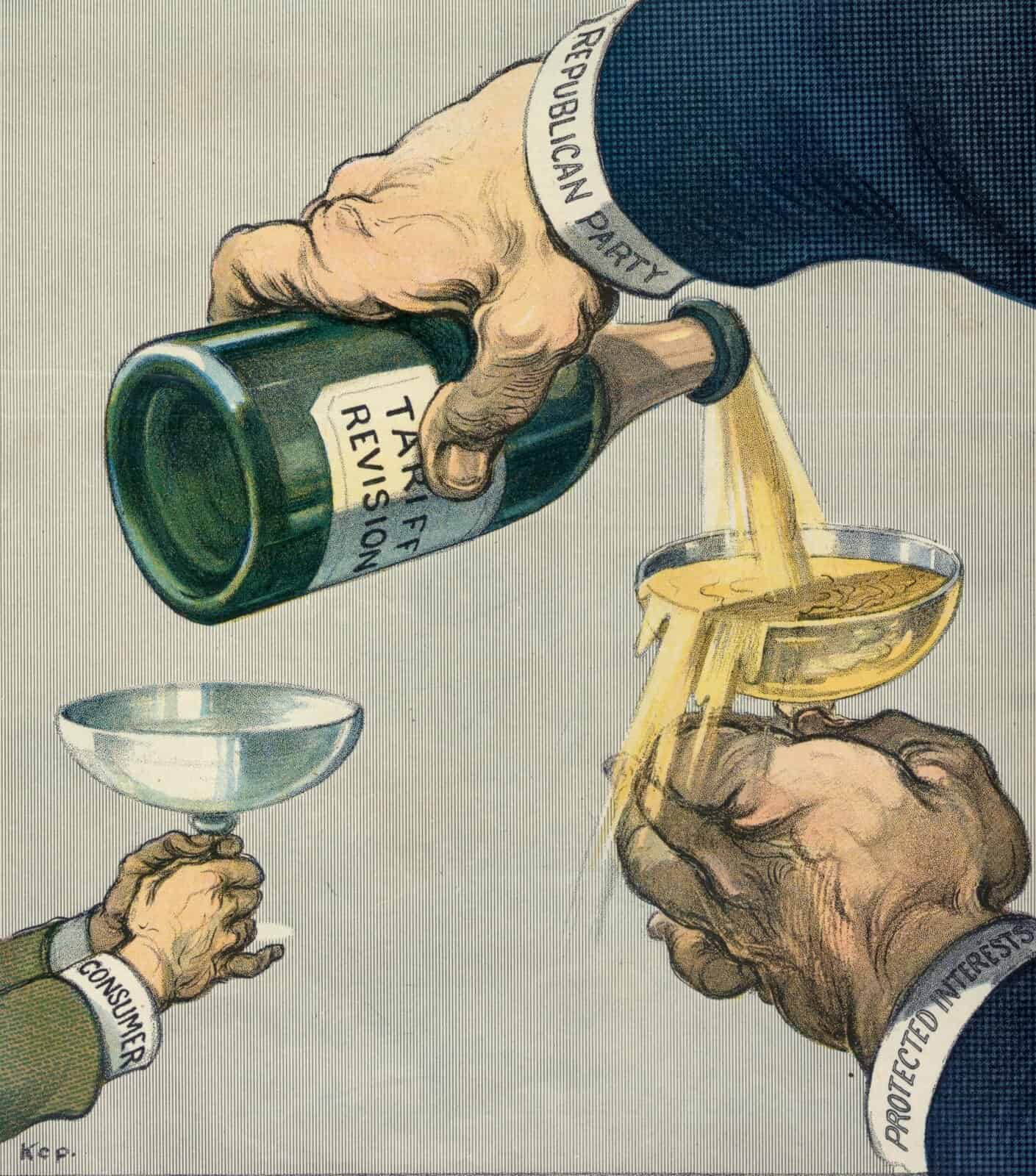
For the specialty cheese industry, “Liberation Day” was anything but liberating. On April 2, 2025, President Donald Trump issued an executive order implementing a broad set of new tariffs, or taxes on products imported from other countries, dubbing the occasion “Liberation Day” in recognition of what he called the United States’ “declaration of economic independence.” The order announced unprecedented tariffs of 10 to 50 percent across a broad range of trading partners, including the European Union, the United Kingdom, and Switzerland—key suppliers of cheese to the US.
“That week was easily one of the scariest, most disorienting, disgruntling, disappointing weeks I’ve had in the cheese business,” says Adam Moskowitz, owner of importer Maker to Monger and Larkin Cold Storage in Queens, New York. “That week felt like our government was operating as the mafia, and to be blunt, it still continues to feel that way.”
Since then, specialty cheese—not to mention the US and global economies—has been roiled by the fallout. Importers, distributors, retailers, and cheesemakers on both sides of the Atlantic have felt the strain of higher costs, reduced demand, and economic anxiety. Even as regulators have indicated that the highest tariffs will be downgraded sometime in early 2026, 2025 will go down as the year uncertainty became the industry’s new normal.
“Tariffs Are Only One Part of the Problem”
Starting in the 1950s, the average tariff on all imports to the US hovered between 2 and 4 percent. Until Trump took office, tariffs functioned as a nominal, relatively static fee for specialty food importers—just part of the cost of doing business. Blanket double-digit increases were unheard of.
“The supply chain does not like price increases, it surely doesn’t like surprise price increases, and it doesn’t ever allow for immediate price increases,” Moskowitz says. While importers scrambled to react to the changes, the effect on demand was swift. At Larkin, which handles ocean freight imports for around 30 US-based companies, Moskowitz saw a 27 percent year-over-year drop in volume in the period between April and September.
After the financial impact, the most chaotic aspect of the tariffs was the whiplash-inducing way they were implemented. It was unclear whether the new tariffs would be a flat rate or layered on top of existing duties. How much the tax would increase on a given trading partner could change overnight. Tariffs on certain goods or countries would be put on pause. An off-the-cuff social media post from the president could call everything into question. As a result, importers had no idea what they’d have to pay when orders already in transit hit the docks.
“My team has lost an insane amount of hours trying to understand what our actual cost will be, when new cost increases will take place, and how to navigate and implement that through our various supply chain partners,” Moskowitz says of Maker to Monger. Accounting for tariffs might sound as simple as tacking a surcharge onto an invoice, but the volatile situation made everyday tasks like creating price lists and negotiating payment terms a complicated process with serious stakes: “If you don’t bill correctly, you lose money.”

Importers have also been up against a weak US dollar, which experienced its biggest drop in value in 50 years during the first half of 2025. This effectively drove up the costs of imports from Switzerland, the UK, and EU countries by nearly 11 percent. “Tariffs are only one part of the problem,” says Steve Margarites, president and CEO of Dutch Cheesemakers, which imports and distributes Gouda, Edam, and other varieties under the Artikaas label. “The exchange rates are worse than the tariffs. Take that and the tariffs and you’ve got a mess.”
Switzerland Singled Out
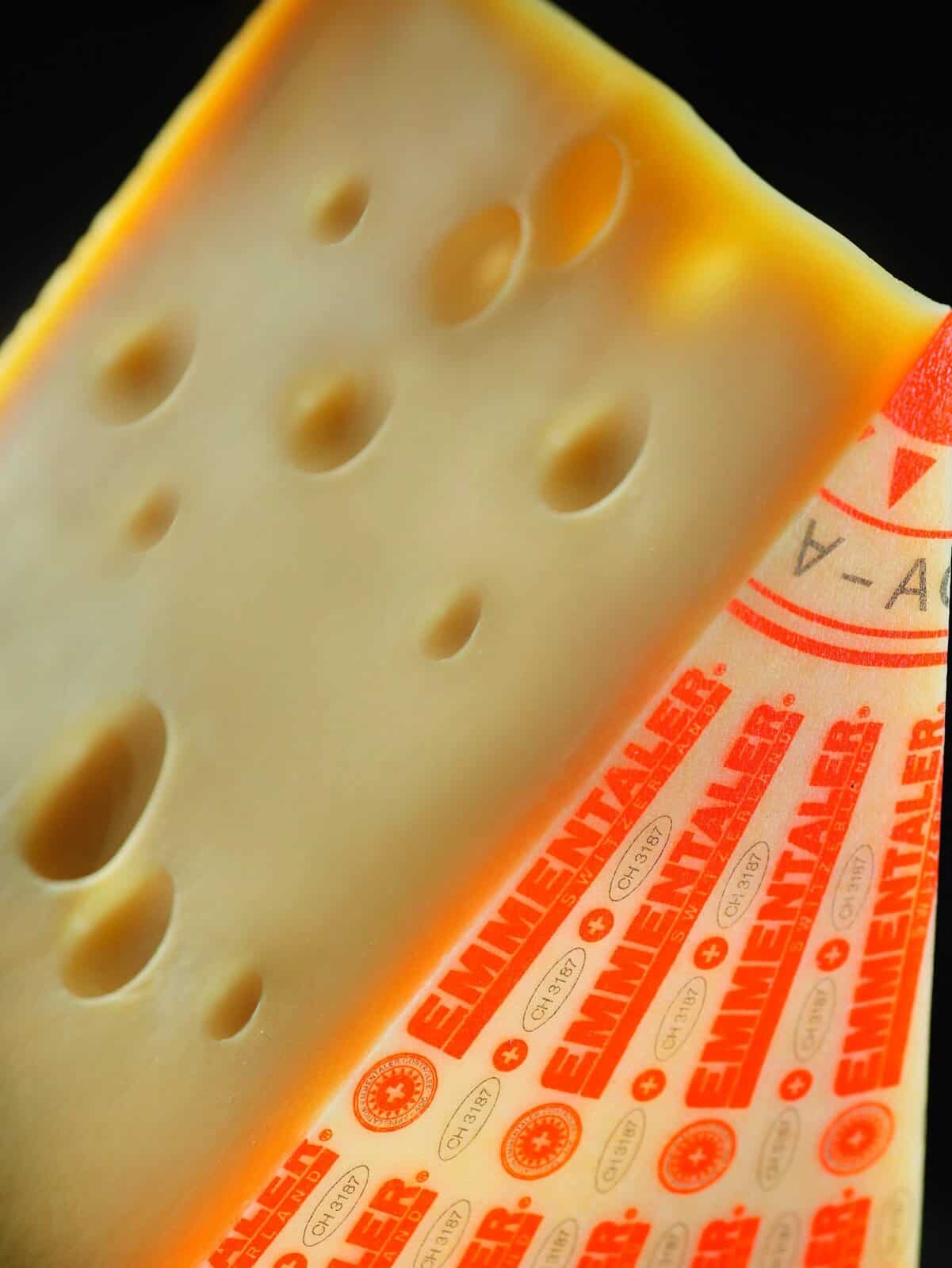
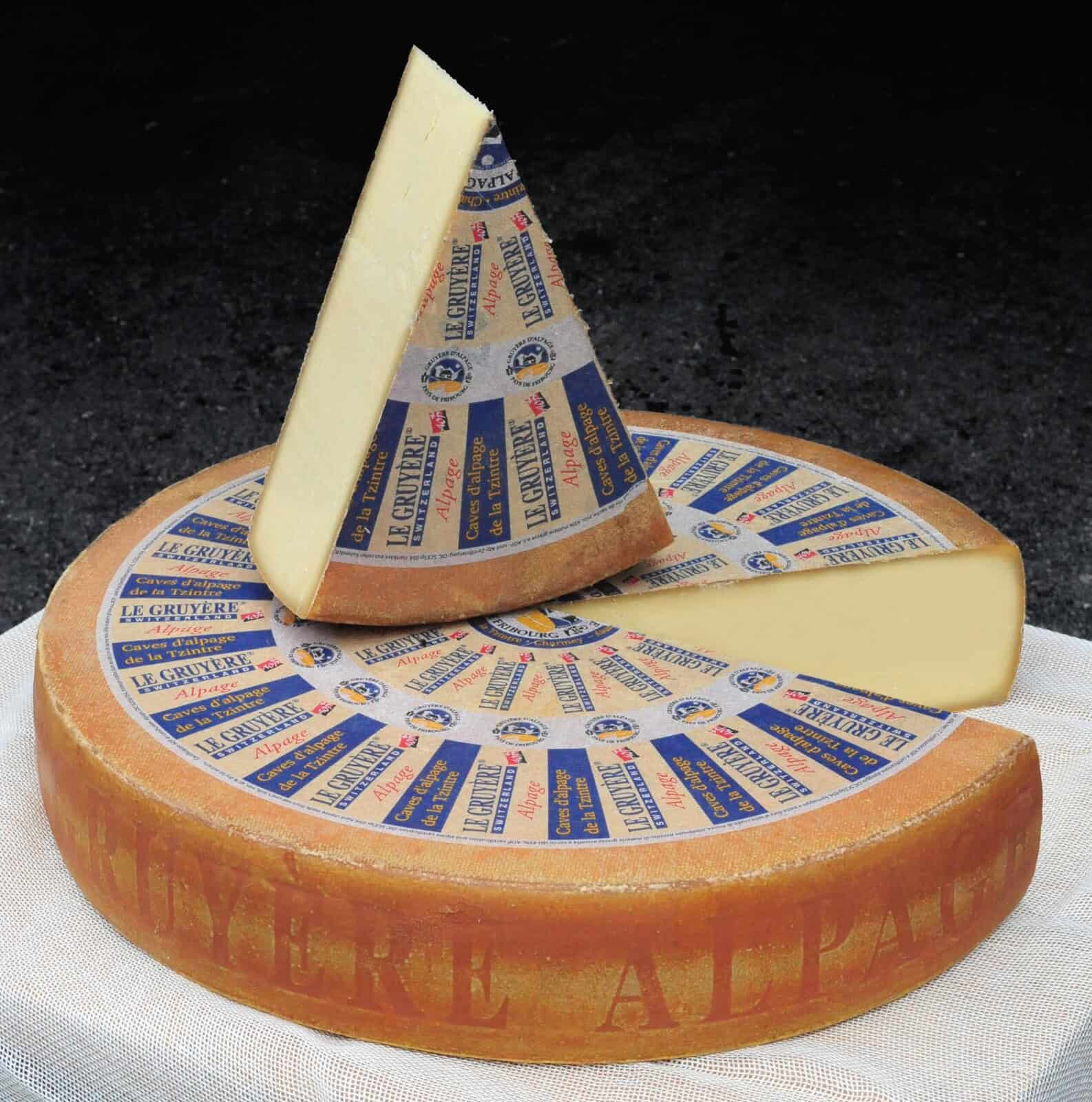
In May, the UK struck a deal with the US limiting their tariffs to 10 percent. After a threatened 30 percent import fee on most EU products, negotiations brought the number down to 15 percent in late July. But on Aug. 1, the administration announced that Swiss imports would be taxed at 39 percent—higher than the 31 percent proposed in April, and much higher than the temporary 10 percent that held for most of the summer. For businesses specializing in Swiss cheeses, 39 percent felt like a senseless punishment for an unknown transgression.
“The whole world is asking, ‘Why?’ Nobody can give you an answer,” says Caroline Hostettler, an importer whose Adopt-an-Alp program connects retailers to individual Swiss cheesemakers. When the news broke, she, her distributor Forever Cheese, and the producers they work with paused all Swiss imports, feeling the risk was too great to move cheese that would be so much more expensive than other European wheels. “We didn’t want to bring in cheese and let it rot,” she says.
For Joe Salonia, who manages US sales for the Swiss company Gourmino, halting shipments was never an option. He spent spring and summer strategizing with the company’s partners, revising promotional plans, and staying in touch with customers through each fluctuation, only for the 39 percent tariff to change everything again. There was no way around it: the company and its importer would absorb what they could of the additional costs, but beyond that, the tariffs would be reflected in pricing. Except for a few special promotions, distributors would have to pay a premium if they wanted Gourmino cheese for the holidays.
In a surprisingly positive development, most of them did, with small reductions in more specialized varieties. However, overall, Gourmino has seen lower order volume since the tariffs were implemented. “We’re maintaining equilibrium, but there’s still a concern with the US market, which is really critical to our strategy,” Salonia says, though the company still has strong sales in other countries.
Hostettler, too, found that after several weeks of hiatus, there was enough demand from retailers to resume Adopt-an-Alp. “We went back to everyone who initially committed to the program and let them cancel, change, or stick with their order,” Hostettler says, estimating that more than half of the program’s customers moved forward despite the additional cost. “It was heartwarming to see how many good folks are out there, monger and end consumer-wise.”
Trickle-Down Tariffs
Tariffs this steep can’t be absorbed by any one link in the supply chain. As costs increase for importers, they also increase for specialty food distributors, who pass them on to retailers, restaurants, and other wholesale customers. Cheese shops and counters must increase their retail prices in turn to avoid losing money.
“The cheese industry as a whole seemed to do their best to not react too early,” says Chelsea Lowrie, cheese buyer at gourmet grocer Zupan’s Market in Portland, Oregon. “At some point around midsummer, everyone just went, ‘OK, we have to act. We can’t go out of business holding our breath.’”
By early fall, the imported cheeses in Lowrie’s case cost 10 percent, 15 percent, or nearly 40 percent more than they had weeks before. After doing her best to slowly ramp up shelf prices, there was nothing to do but raise them to reflect her costs—which meant pricing Swiss-made cheeses at an unheard-of $40 per pound across the board.
“We’re a luxury market and I’m a professional cheesemonger. I am not afraid to offer quality products to my quality clientele and have that conversation about why something is worth it,” Lowrie says, citing an analogy she’s been using to explain the Swiss cheese situation to customers. “All Champagne is Champagne, but there is cheap, mid-range, and high-end Champagne. Imagine that suddenly, Champagne as a category all costs roughly $100 a bottle. That’s a very big switch from a consumer perspective.”
Educating consumers about why specialty cheese costs more than commodity blocks has always been a key skill for cheesemongers, but the drastic, tariff-driven increase in shelf prices doesn’t reflect added value, making that task even more challenging.
“If we could sustain 15 or 20 or 39 percent more per pound, we should have been paying that the whole time and making sure the cheesemakers were making a better wage for themselves,” says Jessica Galen, who opened Bloomy Cheese & Provisions, a small shop in Dobbs Ferry, New York, in 2022. “Instead, [shop owners are] going to have to pay that, and now they’re in a tougher spot because they’re going to sell less.”
With tariffs in the news and grocery prices climbing for both imported and domestic goods, customers’ perception of value can change when it’s time to buy—but that perception isn’t always accurate.
“Uninformed shoppers are looking more closely at prices, and I hear them saying, ‘This is too expensive. It must be because of the tariffs,’ when in fact, some of those prices haven’t changed,” says Austin Banach, cheese buyer at Guido’s Fresh Marketplace in Great Barrington, Massachusetts. Ironically, because Guido’s has its own import license and works directly with international producers, they’ve been able to negotiate pricing and promotions to mitigate some of those increased costs.
Cheesemakers at Risk
Banach has noticed that some customers have shown a new interest in local cheeses and accompaniments, which retailers can sometimes struggle to cultivate when shoppers are more familiar with imported brands. But the Trump tariffs haven’t resulted in booming business for many American artisans or lower prices on domestic cheeses for consumers.
Economic uncertainty depresses order volumes of American artisan cheeses, too—which tend to cost more than pre-tariff imported cheeses in the first place. Production costs are also increasing. Cheesemaking ingredients such as cultures and rennet; consumables like cheese paper, plastic, and cardboard; and specialized equipment and machinery come from countries like France, Switzerland, and Canada, with few domestic alternatives. Those higher costs ultimately drive up the retail prices of cheese made by artisans in the US.
“Our perspective is that any disruption to the specialty food ecosystem is bad for us because it’s bad for our customers,” says Zoe Brickley, the director of communications and e-commerce at Jasper Hill Farm in Vermont. “When the system is stressed, costs tend to go up, sales tend to go down, and people are less keen on taking risks and bringing on more expensive products, which is where we dwell.”
For Jasper Hill, domestic sales aren’t the only variable affected by tariffs. Most US producers who would be considered artisanal aren’t at the scale to export their products to other countries, but Jasper Hill had invested 15 years in building an export market in Australia and began selling products in Canada a few years ago. Though overall US cheese exports remained near record high as of July 2025 per US Dairy Export Council data, much of that was commodity cheese. With tariffs in place and consumer sentiment in those markets shifting, Jasper Hill’s high-end products were the first to go. “Things cooled off with these new trade policies,” Brickley says.
Switzerland’s producers are also feeling negative effects. Despite lower orders for cheese, milk kept flowing on the small-scale Alpine dairies that supply the country’s makers. The drop in demand due to high tariffs combined with a particularly good year for milk production led to some Swiss dairy farmers sending healthy, high-producing cows to slaughter early to avoid oversupply.

More Confusion for the Holidays
The 39 percent Swiss tariffs continued through fall as holiday shipments made their way into cheese cases. Then, in mid-November, as grocers geared up for the pre-Thanksgiving frenzy, it was announced that the 39 percent tariff would drop to 15 percent, on par with the EU. (According to news reports, negotiations resumed after a delegation of Swiss executives presented the president with a Rolex desktop clock and a custom-engraved gold bar.)
As of press time, however, the lower tariff hasn’t gone into effect—and importers aren’t holding their breath. For Moskowitz, who imports Gourmino cheeses and other Swiss brands, the announcement simply continues the lack of clarity the specialty cheese industry has struggled with for most of 2025. “As nice as it was to learn this news, at the moment it just creates more confusion and even hysteria because it is not clear when and how the tariff gets reduced,” he says.
When exactly would importers stop being charged the higher rate? Would the Swiss tariffs be capped at 15 percent, as EU tariffs were, or be stacked on top of existing duties? Could importers recover their losses after months of reduced sales and margins? “This news has many people assuming immediate price decreases when it’s possible that the product I purchase does not get this reduced tariff applied until April or May,” Moskowitz says. With shipments taking six weeks to cross the Atlantic, and given the chaos and confusion with which the duties were implemented, it’s impossible to say when importers and their customers will find relief.
Salonia acknowledges the challenge of selling cheese at two very different price levels until the higher-rate product can be moved through. “As the 15 percent rate takes full effect and we clear through the older 39 percent stock, pricing will steadily move in line with the new tariff structure,” he says. “We’re not naive to the fact that we’ll eventually have to make some hard decisions on how to price the higher-tariff lots of cheese we hold as we transition.”
Just as the jump in tariffs filtered down to grocers and consumers, retail prices for Swiss cheeses won’t come back down to earth until their suppliers’ do. “I am already taking a significant margin hit, so I can’t lower prices prematurely,” says Lowrie, speculating that suppliers may be motivated to lower prices on high-tariff product sooner to entice customers—or they could wait longer to be sure that tariffs won’t swing back up again. “I don’t even know what’s worse, the tariffs or the uncertainty.”
“No One Wins Because of This”
Tariffs aren’t the only adverse conditions small-scale cheese businesses are navigating right now. Along with the weak dollar, the industry is facing workforce challenges, a 40 percent jump in the cost of commercial utilities since 2020, and widespread inflation that increased the cost of groceries 29 percent between February 2020 and September 2025, according to Bureau of Labor Statistics data.
“The sad part is that the tariffs are going to be the straw in the truckload full of straws that’s constantly being dropped on every camel’s back in this world,” says Alex Brown, the wholesale cheesemonger at Gourmet Imports in Los Angeles. “I like to think that we will learn how to be resilient in the face of this f——— mess, but it’s going to suck.”
Then there are the localized crises: mass layoffs of government workers in Washington, and communities in Florida still recovering from 2024’s hurricane damage. Even though Sarah Simms only stocks domestic products at Lady & Larder, her shop in Santa Monica, California, she’s feeling squeezed by the higher costs of basic supplies driven by tariffs and inflation, plus the effects of economic and environmental conditions closer to home.
“In our microclimate of Los Angeles, it has been a gnarly two years. We had writer strikes that the industry has not recovered from,” she says. “Then we had the fires in January, which decimated half the city. It’s been really, really tough.”
The prevailing fear is that even when—or if—conditions do improve, some businesses won’t make it through this period of high costs and lower sales. Cheese cases will be less diverse, and community hubs, farmland, and centuries-old foodways will be lost. Small-scale dairy farmers and cheesemakers, whether in the Swiss Alps or the US, are less likely to weather overlapping storms than corporate-owned, large-scale producers. Indie cheese businesses are already endangered: Bedford Cheese Shop in New York; The Cheese Shop of Salem, Curds & Co., and The Grey Barn Farm in Massachusetts; and Old Brooklyn Cheese Co. in Ohio closed in 2025 alone.
“I feel very sad about it. I’m angry, but I’m also just really, really sad because it’s so pointless,” Galen says. “No one wins because of this.”

Alexandra Jones
Alexandra Jones is a writer and recovering cheesemonger based in Philadelphia. Her work on food, agriculture, social justice, and sustainability has appeared in outlets like USA Today, Food & Wine, Atlas Obscura, Civil Eats, The Counter, Audubon, the Philadelphia Inquirer, and Modern Farmer. She’s the author of Stuff Every Cheese Lover Should Know, a pocket guide to cheese from Quirk Books.