
European affinage is a time-honored tradition that Americans can learn from
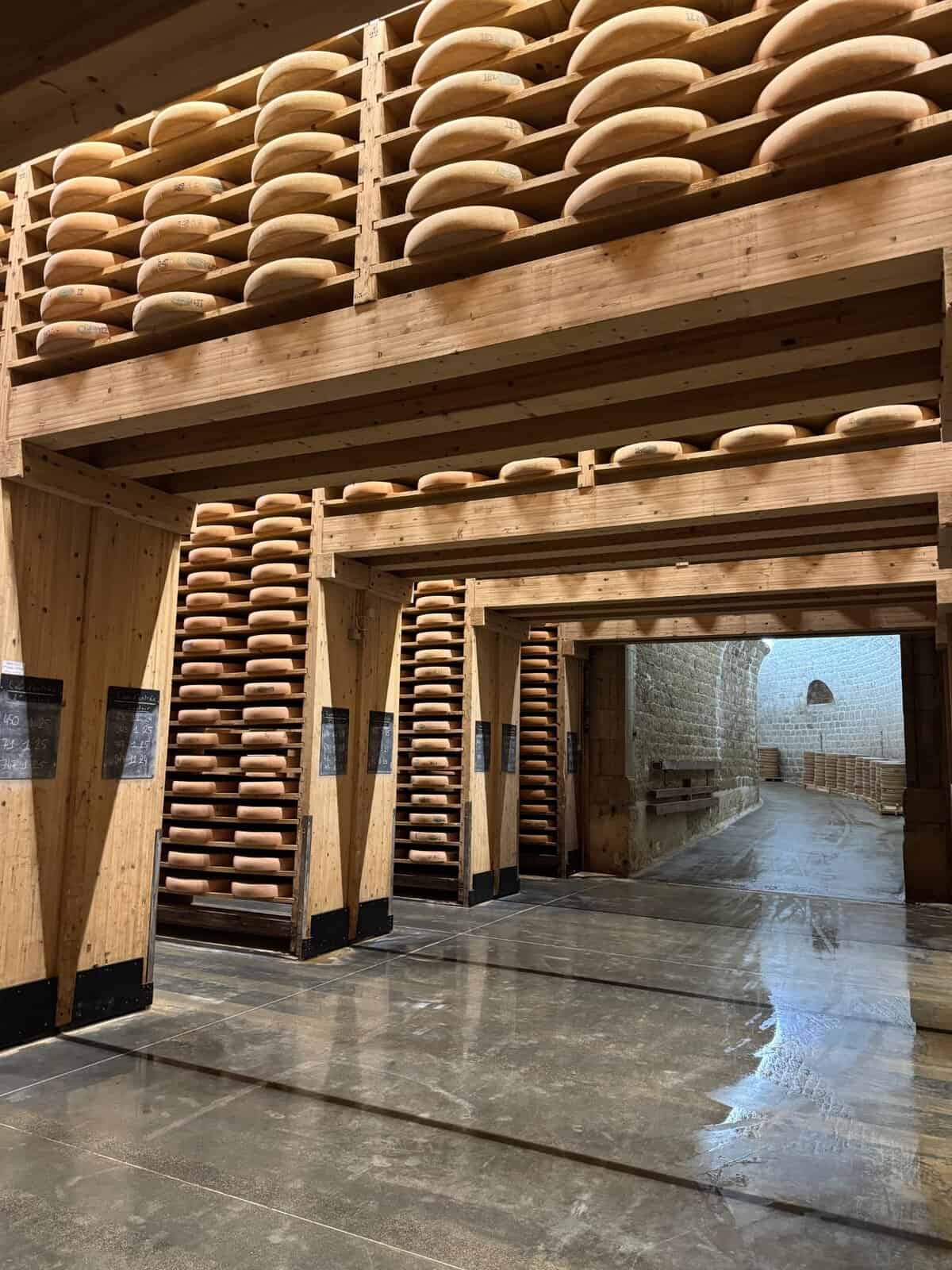
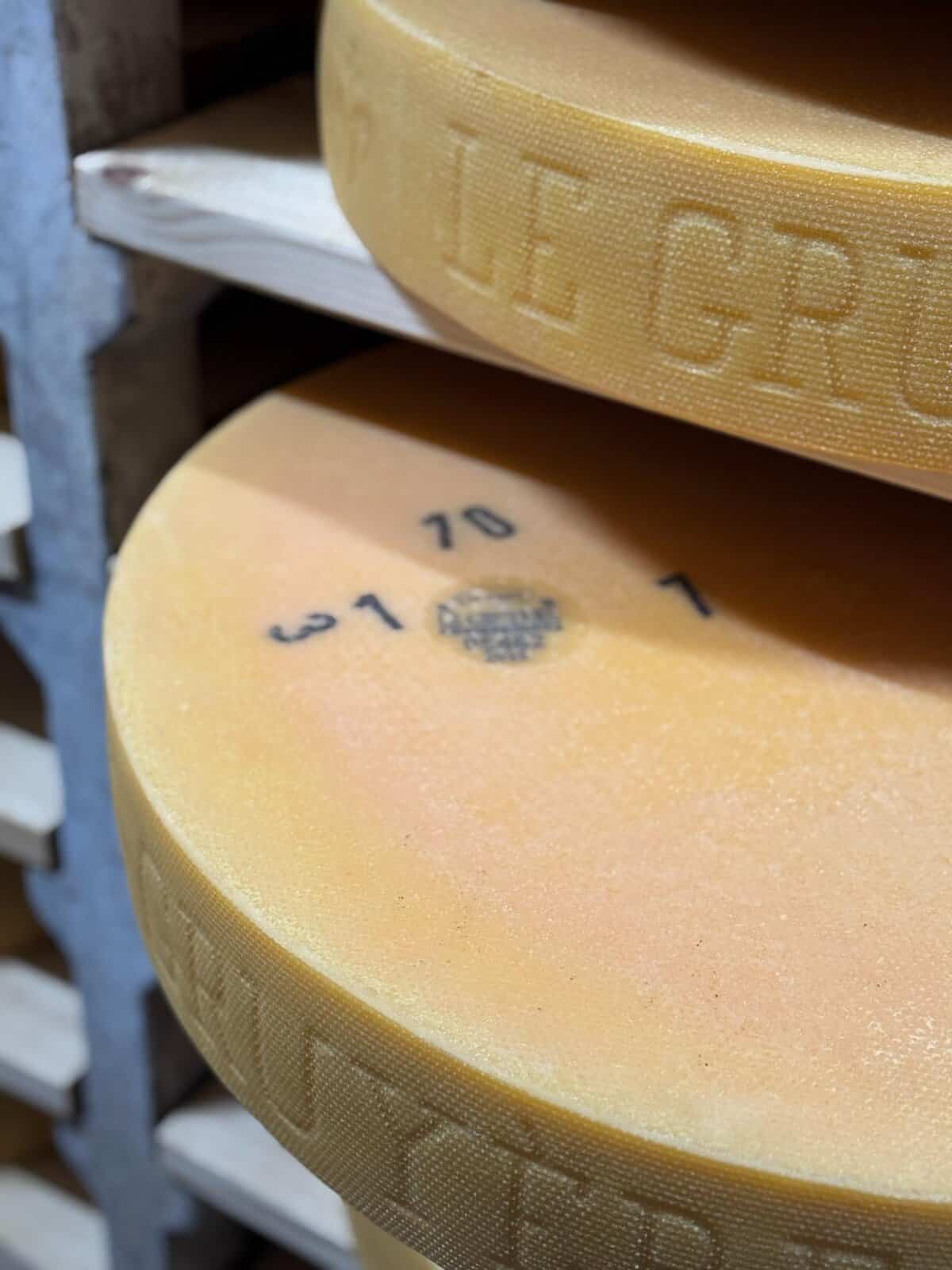
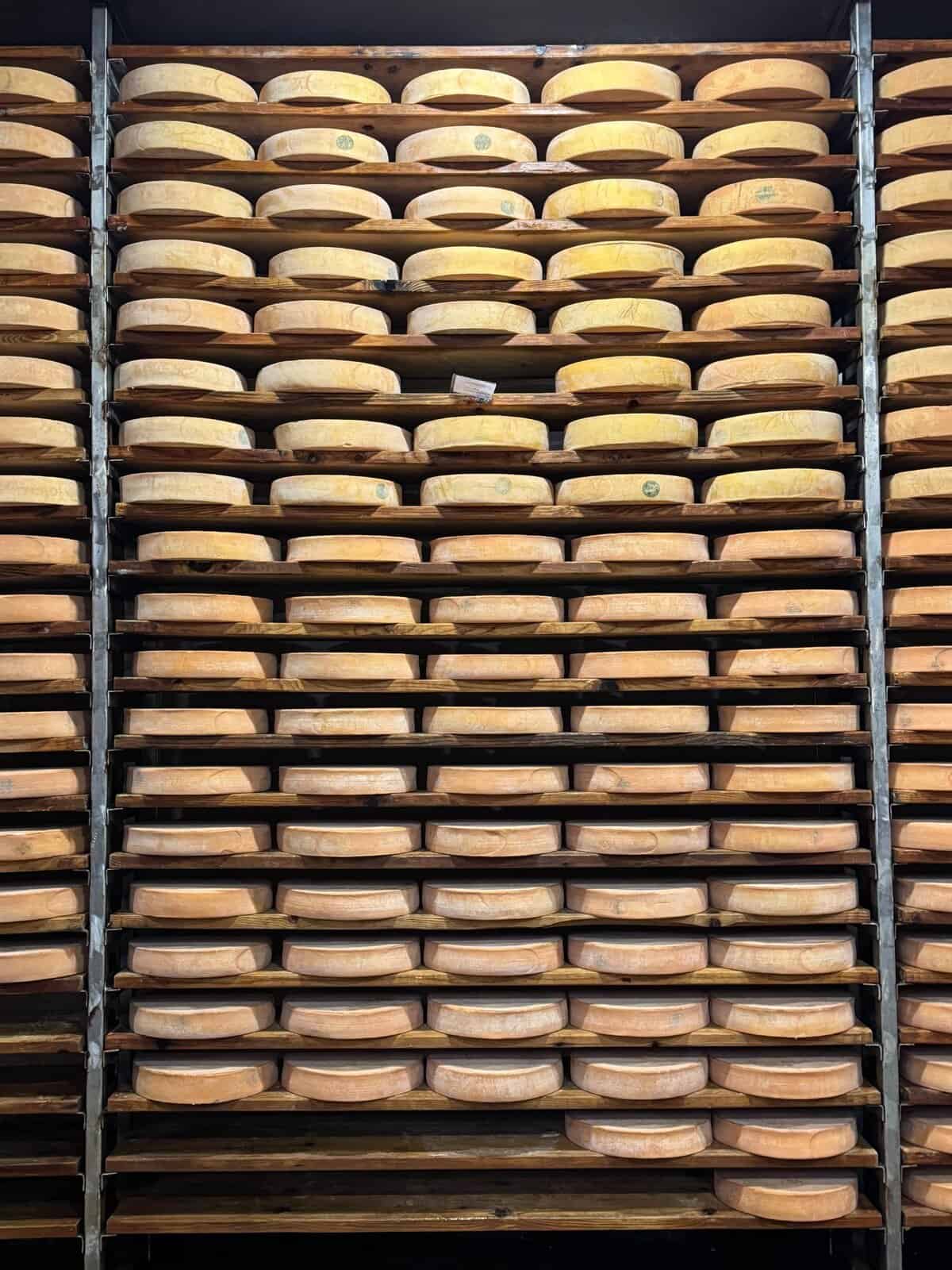
On a cool fall morning in the Alps, an aromatic bouquet of fresh milk and damp stone drifts across the mountains. Deep inside a vaulted cellar, wheels of cheese—each weighing close to 80 pounds—are stacked like golden tomes on wide wooden planks. A man in a white coat pulls a wheel from the shelf and runs his hand along the rind, gently tapping the surface with a small hammer and listening for the soft thud that signals the right moisture within. Around him, thousands of cheeses rest quietly in low light, slowly transforming into something complex, elegant, and alive.
This is the world of an affineur—the unsung artist who coaxes cheese from youth into maturity. Throughout Europe, affinage is a revered profession, separate from cheesemaking. It’s part science, part art, and part relationship between milk, maker, and microbe.
Across the French and Swiss Alps and into Italy’s Aosta Valley, affineurs are shaping some of the world’s most recognizable cheeses: Gruyère, Comté, and Fontina. Yet their quiet influence often goes unnoticed in the US. Stateside, only a handful of affineurs are exploring what Europeans have long understood: Aging is not an afterthought; it’s where cheese finds its personality.
Trusting Time
The practice of affinage has deep roots in European cheesemaking, tracing back to the Roman Empire, when hard cheeses were cured for storage and transport. During the Middle Ages, monastic communities refined the tradition: monks aged cheeses in cool, humid caves, realizing that extra time, controlled temperature, and microflora dramatically improved cheese’s flavor and texture.
By the nineteenth century, dedicated affineurs emerged, especially in France, where families began systematically aging cheese in cellars. In French, affinage means “to refine,” and that’s exactly what happens once a cheese leaves the make room. Affineurs receive young wheels and place them in caves or cellars designed to mimic natural cave conditions. There, over weeks, months, or even years, the cheese is brushed, brined, flipped, and coaxed toward maturity.
Two categories of cheesemaking dominate this landscape. The first is larger-scale, cooperative production—consistent, efficient, and vital to regional economies. The second is mountain-pasture cheesemaking (alpage in French), which happens seasonally in high Alpine meadows where herds graze on wildflowers and herbs and only about two wheels are crafted daily. The affineur’s job is to respect both styles, preserving nuance while ensuring every wheel emerges balanced and sound.
Nestled in Switzerland’s Fribourg region, Fromagerie Moléson has been perfecting the art of affinage since their aging cellars were built in 1982. Working exclusively with non-silage milk from a close network of local dairy farms, Moléson honors tradition while embracing innovation. Inside their state-of-the-art aging facility, time and terroir work hand in hand, transforming wheels of Vacherin Fribourgeois and Le Gruyère—including a signature line of Gruyère exclusive to their brand—into masterpieces. “Every detail matters,” notes Hugo Dafflon, key account manager at Fromagerie Moléson. “It is this precision that turns a good cheese into an exceptional one.”
Both Gruyère and Vacherin Fribourgeois are made in small, carefully controlled quantities—roughly 30 and 27 wheels a day, respectively. Each wheel of Gruyère, which is produced from raw milk, is pressed for 21 hours, brined for a day, and aged on spruce boards (locally known as tablards), then on dry boards, with semiautomatic washing to ensure uniform development.
“As producers of these two PDOs, we have the responsibility to strictly respect their specifications, which guarantee their authenticity,” Dafflon says. “This means that certain types of innovation are not permitted. For example, we cannot create another hard cheese besides Gruyère PDO, nor can we develop a semi-hard cheese that might resemble Vacherin Fribourgeois PDO in size, shape, or recipe.”
In skilled hands, time itself shapes each wheel, turning tradition and care into the distinct character that defines these cheeses.
A Tale of Two Cheeses
Few cheeses illustrate the art of aging better than Switzerland’s Gruyère and France’s Comté. Both share Alpine DNA—raw cow’s milk, cooked and pressed curds, massive wheels, and strict appellation rules—yet affinage is what differentiates the two.
Le Gruyère typically ages five to 12 months, sometimes longer for “surchoix,” or those deemed standout cheeses by the experts. Cellars hover around 55°F with near-saturated humidity: perfect conditions for gradual dehydration and flavor concentration. Over time, Gruyère’s smooth ivory paste develops crunchy tyrosine crystals, while tasting notes deepen into roasted nuts, dried flowers, and caramelized onions.
Comté, by contrast, often ages longer—up to 36 months or more—in the great caves of the Jura Mountains, where each wheel is monitored with ritual precision. Wheels have been made using the same recipe for over 700 years, originating from small-scale family dairies. Cows traditionally grazed on steep mountain slopes during summer, and cheesemakers made large, long-lasting wheels to sustain local villages through harsh winters. Over time, this evolved into a system of farm-owned dairy co-ops (fruitières) that produced the cheese, which was then passed to affineurs to bring to full maturity.
One of the region’s most respected affineurs, Fromageries Marcel Petite, has been aging cheeses for over five generations. Miles of underground tunnels weave within an abandoned military fort carved into limestone. Inside, more than 100,000 wheels slumber on spruce boards, turned and dry-salted in rotation.
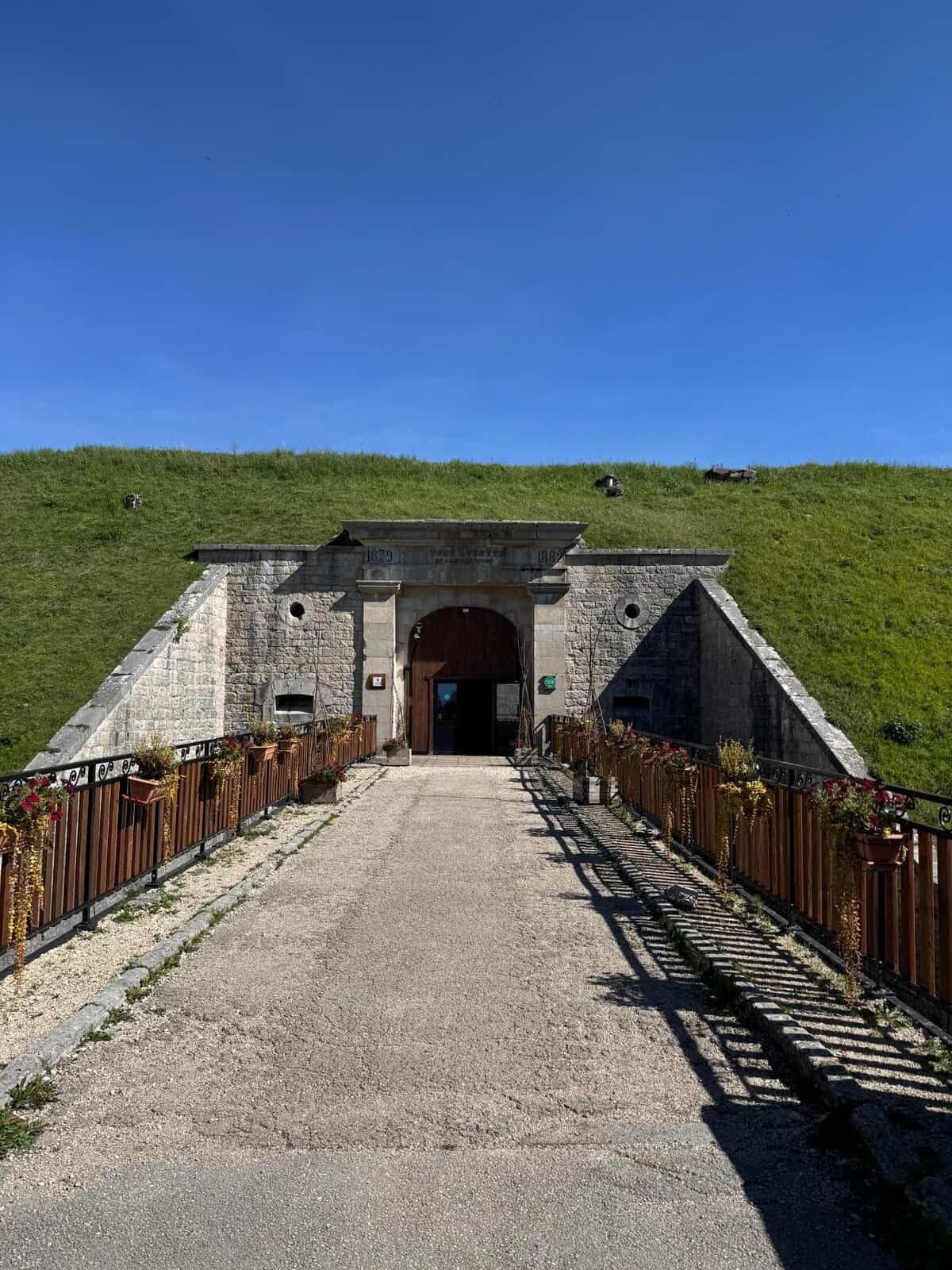

“I often describe myself as a ‘Comté breeder,’” says Claude Querry, manager of Fort de Saint-Antoine, one of two aging sites at Marcel Petite. “My father was a Montbéliarde cattle farmer, and he passed on three fundamental values: honesty, responsibility, and attention to detail. Just as a farmer constantly watches over their herd, I watch over our cellars and our wheels. Without care, nothing evolves properly. Cheese deserves as much attention as living beings.”
In his nearly 40-year tenure at Marcel Petite, Querry ensures each wheel of Comté is methodically assessed for sound, smell, and texture. Those showing the most promise are moved deeper into the cave, where cooler, more humid air allows for slow, complex development. Others are earmarked for younger release. “My fundamental principle is: the one who does, sees,” Querry says. “This careful work of selection and ‘taming’ of the cheese—patient and demanding—allows each wheel to express its full potential.”
The result? A spectrum of profiles, from supple and buttery 12-month wheels to dense, crystalline 36-month Comtés with flavors of hazelnut and browned butter.
All in the Family
Travel south to Italy’s Aosta Valley and you’ll find another approach to aging rooted not in individual caves, but in community. Fontina, one of the region’s most celebrated PDO cheeses, owes its character to its cooperative model as much as it does to its milk.
Made exclusively from the milk of Valdostana cows, Fontina must be produced and aged within the valley under strict regulations. “Fontina d’Alpeggio is profoundly shaped by its season of production,” explains Vincent Christophe, Master Cheesemaker at Fromi. “Summer milk is naturally more aromatic, richer, and gives the cheese a more expressive texture.”
Once formed, young wheels are delivered to the Cooperativa Produttori Latte e Fontina, which was founded in 1957 to standardize quality and preserve tradition. The cooperative now unites more than 200 small dairies and matures every wheel in a network of natural caves carved from copper-streaked rock—remnants of the valley’s mining history that lend a faint orange hue to Fontina’s rind.
Inside the caves, the air is cool and humid year-round. Workers brush and turn the wheels daily, washing rinds with salty brine to cultivate Fontina’s signature bloom. After about 80 days, the cheese begins to show off: supple texture, gentle earthiness, and notes of hay, nuts, and melted butter. Longer-aged versions develop an almost meaty aroma yet remain sweet and linger on the palate. Producing roughly 240,000 wheels annually, the cooperative supplies 60 percent of Fontina globally, while alpage (Fontina d’Alpeggio) accounts for 20 to 30 percent.
Among the cooperative’s celebrated cheesemakers is Attilio Yeuilla, whose production at Les Maisonnettes near Avise exemplifies the artistry behind Fontina d’Alpeggio. In 2013, he won the Fontina d’Alpeggio award, a testament to his mastery of the aging process. Beyond crafting exceptional cheese, Yeuilla contributes to the broader community as a member of the Cooperativa Produttori Latte e Fontina steering committee, helping ensure consistent quality across the valley.
At Yeuilla’s alpage, collaboration and tradition go hand in hand. “Cows are still hand-milked every day, and Attilio immediately makes the cheese after milking to preserve all the organoleptic qualities of mountain milk,” Christophe notes. His work exemplifies the cooperative ethos at the heart of Fontina production, where every stakeholder—farmers, cheesemakers, affineurs—benefits equally. It’s a collective embodiment of what affinage represents: stewardship, patience, and shared responsibility. When Fontina received PDO status in 1995, that system was enshrined in law, safeguarding both product and people.
Aging Stateside: The New Frontier
By contrast, American cheesemakers often handle aging in-house—practical, yes, but somewhat limiting. Dedicated affineurs bring a level of focus and expertise that few makers have the time or resources to match. They also create a bridge between farm and market, allowing cheeses to develop to their full potential under experienced hands. Despite slow development in the US, a new generation of American cheesemakers is beginning to appreciate the value of affineuring.
However, American affineurs face a unique challenge because cheesemaking often prioritizes production over guidance when it comes to aging.
“When you look at a process for making cheese, 98 percent of the steps describe the first 24 hours of work, and it ends with something akin to, ‘Age at 9°C and 90 to 94 percent humidity for four weeks,’” says Josh Windsor, associate director at Murray’s Cheese Caves. “The majority of the time spent [developing a cheese] is in the aging, and it receives the smallest amount of attention.”
Murray’s Cheese in New York City operates its own urban caves in Long Island City, aging wheels from partners like Jasper Hill Farm and Firefly Farms into retail-ready masterpieces. The program focuses on mastering patience, applying a full range of techniques to develop high-quality cheeses that are uniquely tasty. Some cheeses, such as dense and fudgy Barnstorm Blue, showcase technical skill and balance, while others, such as Greensward or Carpenter’s Wheel, illustrate how the collaborative process influences each cheese’s potential. “Even when a cheese is a little challenging or unfamiliar,” Windsor says, “it can find a group of committed fans as long as it is made and aged to a high standard.”
Farther north at the Cellars of Jasper Hill Farm in Vermont, the underground network acts as both laboratory and library. Beneath their hillside creameries lie seven climate-controlled vaults—each tailored for a specific style of cheese—where wheels receive custom affinage. Makers like Cabot Creamery and von Trapp Farmstead have partnered with Jasper Hill in the past, sending young wheels to be aged under their care, where precise temperature zones and microbial management mimic Europe’s finest caves.
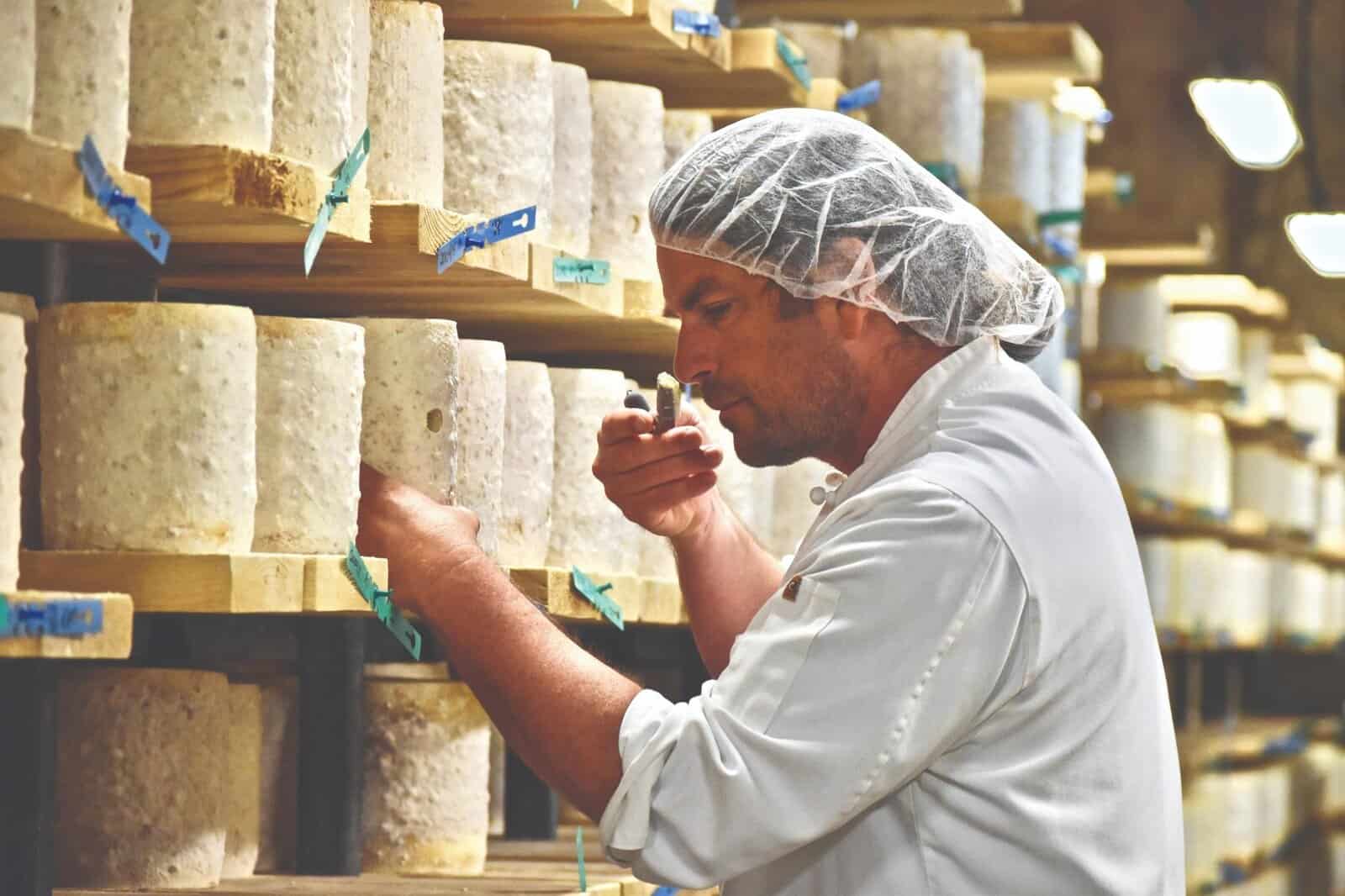
Similar collaborations are picking up speed. Vermont Creamery partnered with Wegmans’ French-led affinage team in 2014 and co-created award-winning wheels year after year; Cave-Ripened 1916 won top honors at the 2018 American Cheese Society Judging & Competition (ACS). The grocery chain also partnered with Old Chatham Creamery to produce the Professor’s Brie, a lush wheel with subtle mushroom notes and a hint of pepper, which took Second Place Best of Show at the 2019 ACS Competition.
These relationships highlight that aging doesn’t need to end where cheesemaking stops. In fact, separating roles can unlock new layers of artistry. “Establishing a partnership with a cheesemaker for an affinage program or cheese caves requires mutual trust and a shared vision,” says Mathieu Callol, Wegmans affineur. “Each participant—farmer, cheesemaker, affineur, and cheesemonger—contributes diligently to deliver exceptional cheeses to customers. It is essential that all parties respect the products and maintain a strong commitment to quality, consistency, and safety throughout the process.”
Off-site affinage offers tangible benefits, too. Dedicated aging facilities are often able to fine-tune temperature, humidity, and microbial flora more precisely than creameries, and they can sort and grade cheeses, extend aging for select wheels, and even experiment with new styles or washes. Perhaps most importantly, they create a shared infrastructure for small producers who may have limited resources to create truly interesting cheeses for their collection.
“A lot of our equipment and ingredients—such as rennet, mold, yeast, and bacteria—are sourced from Europe,” Callol notes. “Although certain equipment and ingredients aren’t always available domestically, this encourages creativity and innovation as we adapt and develop our processes to make the most of what’s accessible in the US market.”
Still, cultural hurdles remain. Regulations surrounding aging raw-milk cheeses in the US are tighter than Europe, and the investment required to maintain natural or simulated caves is steep. But the tide is turning. Consumers are more curious, retailers are more supportive, and American affineurs are more confident than ever.
“Dairy as a whole is a complex and often enigmatic food,” Windsor explains. “From animal husbandry to affinage, we try to incorporate the whole life cycle of a cheese when telling its story—not only with our own cave-aged line of cheeses, but with all the cheeses we offer to our customers.”
The Beauty of Becoming
At its heart, affinage is about transformation. Patience allows nature to reveal itself slowly over time. In the caves of the Jura, the Alps, the Aosta Valley, and now in the US, cheese doesn’t simply age—it listens. Each wheel becomes a kind of time capsule: of season, pasture, and place.
As the American cheese scene matures, there’s much to learn from Europe’s model and even more room to innovate. Off-site aging, cooperative structures, and education could transform not only the quality of US cheeses but the sustainability of the industry itself.
In the end, the art of aging lies not just in patience but in partnership—with time, place, and the hands that guide both.

Mallory Scyphers
Mallory Scyphers is culture's Executive Content Director and has been with the company since 2018. She lives on Mobile Bay with her husband, two young daughters, one rambunctious golden retriever, and two loyal cats. Her favorite cheeses are alpine styles and mineral-y blues.